Responde a:¿Las mediciones neuroarquitectónicas (cortisol, EEG u otros biomarcadores) reportadas en literatura científica se replican en espacios construidos reales como la mini casa o el domo geodésico?Media
Hipótesis:Los efectos observados en laboratorio pueden reproducirse en un entorno construido real.
Evidencia esperada:Diseño experimental, biomarcadores, mediciones fisiológicas y grupo de comparación.
Responde a:¿Cuándo exactamente los subsistemas diseñados (energético, hídrico y ciclo de nutrientes) alcanzarán el punto de operación simultánea?Media
Hipótesis:Los tres subsistemas (energético, hídrico y ciclo de nutrientes) no alcanzarán operación simultánea hasta que el más lento —probablemente el ciclo de nutrientes, que depende de biología— complete su primer ciclo completo de maduración, estimado en 18-24 meses desde la instalación.
Evidencia esperada:Modelo de secuencia de interdependencia documentado en el mapa ancla Iwagé. Cada subsistema tiene hitos medibles: panel solar instalado (energético ✓ parcial), captación de lluvia operando (hídrico ✓ parcial), biodigestor diseñado pero no construido (nutrientes ✗).
Responde a:¿El ROI del 22% documentado en el modelo financiero se mantiene cuando el sistema opera con todos los subsistemas en simultáneo?Media
Hipótesis:El ROI del 22% proyectado en el modelo financiero inicial es un escenario optimista que asume operación simultánea de todos los subsistemas. En operación parcial (solo hídrico + energético), el ROI real estará más cerca del 8-12% durante los primeros 24 meses.
Evidencia esperada:Modelo financiero de la granja peri-urbana con proyecciones por subsistema. Comparación de ingresos proyectados vs. reales para el meliponario (único subsistema con datos reales de 18 meses). Referencia: metodología de Excel optimista vs. modelo biológicamente honesto.
Responde a:¿Qué instrumentos de financiación colombianos (Finagro, CREAME, Minciencias, Ley 1715) son realmente aplicables a un sistema autosustentable de escala familiar?Media
Hipótesis:De los instrumentos de financiación disponibles en Colombia, la Ley 1715 (incentivos tributarios para energías renovables) es el más aplicable a corto plazo. Finagro y Minciencias requieren adaptación significativa para proyectos de escala familiar. CREAME es viable solo para el componente de innovación tecnológica.
Evidencia esperada:Análisis detallado de la Ley 1715 con sus 4 beneficios y riesgos documentados. Marco regulatorio del sistema autosustentable con 7 trámites identificados. Experiencia de aplicación real de la Ley 1715 en el dimensionamiento del sistema solar off-grid de 3.2 kW.
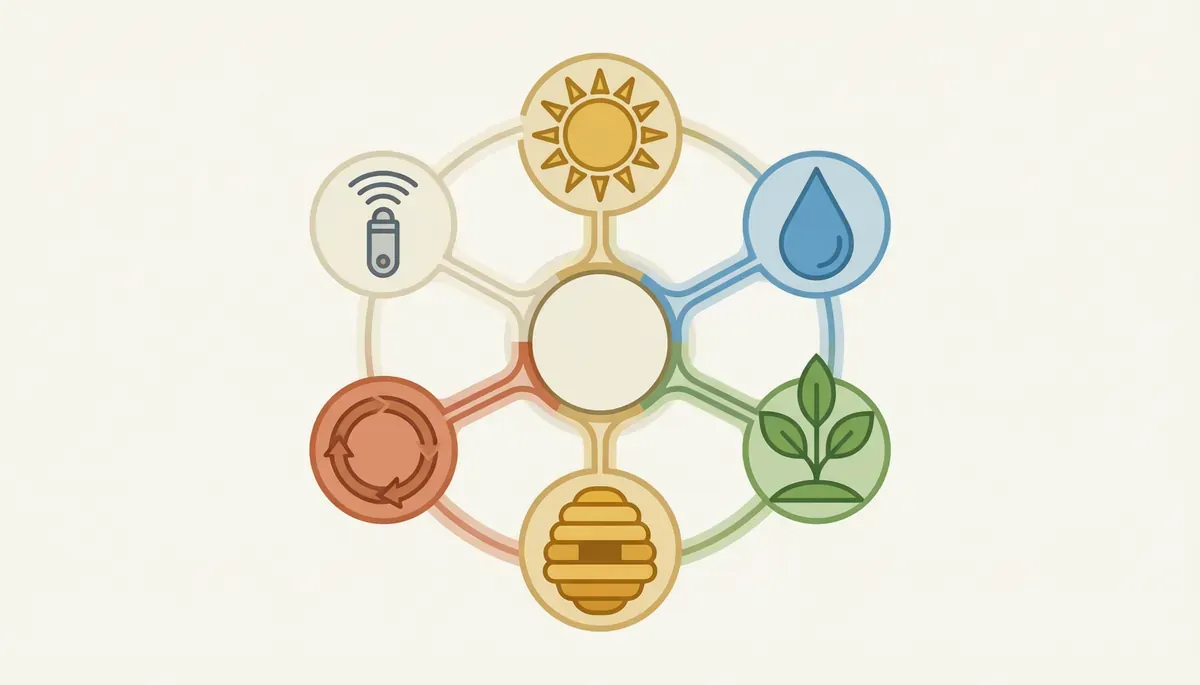
Responde a:¿La secuencia de interdependencia identificada (hídrico → riego → energético → automatización → datos) se confirma en la práctica o es un artefacto de modelado?Media
Hipótesis:La secuencia de interdependencia (hídrico → riego → energético → automatización → datos) refleja el orden real de dependencias técnicas del sistema. Invertir el orden (empezar por automatización antes de tener agua y energía) produciría un sistema que funciona en teoría pero no en campo.
Evidencia esperada:Documentación de la secuencia de construcción real en el corredor Ambalá-Calambeo. Cada paso de la secuencia tiene una dependencia documentada del anterior: sin agua no hay riego, sin riego no hay cultivo que justifique automatización, sin energía no hay sensores.
Responde a:¿Los 40.000 litros anuales estimados de captación de lluvia se confirman con datos pluviométricos reales del corredor Ambalá-Calambeo durante el primer año de medición en campo?Alta
Hipótesis:La estimación de captación coincide con los registros climáticos históricos de la zona.
Evidencia esperada:Series pluviométricas IDEAM, cálculos hidrológicos y mediciones locales.
Responde a:¿La temperatura real del subsuelo entre 2 y 5 metros en el corredor Ambalá–Calambeo es suficientemente estable para garantizar el rendimiento del pozo provenzal proyectado durante todo el año?Alta
Hipótesis:La temperatura del subsuelo es suficientemente estable para garantizar el rendimiento esperado del pozo provenzal.
Evidencia esperada:Mediciones térmicas estacionales del terreno y modelación térmica.
Última evolución:August 30, 2026
El Grafo Cognitivo
↑ Deriva de:
📐Subsistema con variables no lineales
Subsistema con variables no lineales deriva de sistema-autosustentable-ancla
📐Interdependencia de subsistemas
Interdependencia de subsistemas deriva de sistema-autosustentable-ancla
📐Unidad Mínima Viable de Sistema (UMVS)
Unidad Mínima Viable de Sistema (UMVS) deriva de sistema-autosustentable-ancla
📐Modo degradado como criterio de diseño
Modo degradado como criterio de diseño deriva de sistema-autosustentable-ancla
📐Colmena como UMVS (Unidad Mínima Viable de Sistema)
Colmena como UMVS (Unidad Mínima Viable de Sistema) deriva de sistema-autosustentable-ancla
📝Sistema autosustentable Iwagé: mapa de un proyecto en construcción
La bio-refinería doméstica: donde nada que sale se considera basura tiene su origen en Sistema autosustentable Iwagé: mapa de un proyecto en construcción
📝Sistema autosustentable Iwagé: mapa de un proyecto en construcción
Gestión hídrica de ciclo cerrado: el agua que se gana con hábitos tiene su origen en Sistema autosustentable Iwagé: mapa de un proyecto en construcción
📝Sistema autosustentable Iwagé: mapa de un proyecto en construcción
La granja es el detalle financiero del mapa.
📝Sistema autosustentable Iwagé: mapa de un proyecto en construcción
Home Assistant y el gemelo digital de la granja tiene su origen en Sistema autosustentable Iwagé: mapa de un proyecto en construcción
📝Sistema autosustentable Iwagé: mapa de un proyecto en construcción
Marco regulatorio de un sistema autosustentable en Colombia tiene su origen en Sistema autosustentable Iwagé: mapa de un proyecto en construcción
📝Sistema autosustentable Iwagé: mapa de un proyecto en construcción
Sistema solar off-grid: sin red, con todo lo que necesitas tiene su origen en Sistema autosustentable Iwagé: mapa de un proyecto en construcción
📝Sistema autosustentable Iwagé: mapa de un proyecto en construcción
Parte de la serie Iwagé — Sistema Autosustentable; deriva del mapa ancla
📝Sistema autosustentable Iwagé: mapa de un proyecto en construcción
Parte de la serie Iwagé — Sistema Autosustentable; deriva del mapa ancla
📝Sistema autosustentable Iwagé: mapa de un proyecto en construcción
Parte de la serie Iwagé — Sistema Autosustentable; deriva del mapa ancla
🔗Granja Peri-urbana Autosustentable
El proyecto es la manifestación física del mapa del sistema autosustentable
→ Se aplica en:
📐Modo degradado como criterio de diseño
Modo degradado como criterio de diseño se materializa en Sistema autosustentable Iwagé: mapa de un proyecto en construcción
📐Honestidad estadística
Honestidad estadística se aplica en sistema-autosustentable-ancla
📐Clasificación legal temprana
Clasificación legal temprana se aplica en sistema-autosustentable-ancla
📐Falla silenciosa como modo de fallo crítico
Falla silenciosa como modo de fallo crítico se aplica en sistema-autosustentable-ancla
📐Energía soberana
Energía soberana se aplica en sistema-autosustentable-ancla
📐Recirculación vs. reúso como decisión legal de diseño
Recirculación vs. reúso como decisión legal de diseño se aplica en sistema-autosustentable-ancla
📐Compostaje bokashi como pre-tratamiento
Relación declarada en Extracción para el grafo (N-042 enriquecido)
📄Nassim Nicholas Taleb — Antifragile: Things That Gain from Disorder
Nassim Nicholas Taleb — Antifragile: Things That Gain from Disorder se materializa en Sistema autosustentable Iwagé: mapa de un proyecto en construcción
📝Sistema autosustentable Iwagé: mapa de un proyecto en construcción
La Regla de los Tres Ejes: una filosofía de vida antifrágil se materializa en Sistema autosustentable Iwagé: mapa de un proyecto en construcción
❓¿Las mediciones neuroarquitectónicas (cortisol, EEG u otros biomarcadores) reportadas en literatura científica se replican en espacios construidos reales como la mini casa o el domo geodésico?
¿Las mediciones neuroarquitectónicas (cortisol, EEG u otros biomarcadores) repor se materializa en Sistema autosustentable Iwagé: mapa de un proyecto en construcción
❓¿Cuándo exactamente los subsistemas diseñados (energético, hídrico y ciclo de nutrientes) alcanzarán el punto de operación simultánea?
¿Cuándo exactamente los subsistemas diseñados (energético, hídrico y ciclo de nu se materializa en Sistema autosustentable Iwagé: mapa de un proyecto en construcción
❓¿El ROI del 22% documentado en el modelo financiero se mantiene cuando el sistema opera con todos los subsistemas en simultáneo?
¿El ROI del 22% documentado en el modelo financiero se mantiene cuando el sistem se materializa en Sistema autosustentable Iwagé: mapa de un proyecto en construcción
❓¿Qué instrumentos de financiación colombianos (Finagro, CREAME, Minciencias, Ley 1715) son realmente aplicables a un sistema autosustentable de escala familiar?
¿Qué instrumentos de financiación colombianos (Finagro, CREAME, Minciencias, Ley se materializa en Sistema autosustentable Iwagé: mapa de un proyecto en construcción
❓¿La secuencia de interdependencia identificada (hídrico → riego → energético → automatización → datos) se confirma en la práctica o es un artefacto de modelado?
¿La secuencia de interdependencia identificada (hídrico → riego → energético → a se materializa en Sistema autosustentable Iwagé: mapa de un proyecto en construcción
❓¿Los 40.000 litros anuales estimados de captación de lluvia se confirman con datos pluviométricos reales del corredor Ambalá-Calambeo durante el primer año de medición en campo?
¿Los 40.000 litros anuales estimados de captación de lluvia se confirman con dat se materializa en Sistema autosustentable Iwagé: mapa de un proyecto en construcción
❓¿La temperatura real del subsuelo entre 2 y 5 metros en el corredor Ambalá–Calambeo es suficientemente estable para garantizar el rendimiento del pozo provenzal proyectado durante todo el año?
¿La temperatura real del subsuelo entre 2 y 5 metros en el corredor Ambalá–Calam se materializa en Sistema autosustentable Iwagé: mapa de un proyecto en construcción
↓ Sustenta a:
📐Trípode de estabilidad vital (Regla de los Tres Ejes)
El proyecto es la evidencia más concreta de que el trípode no es metáfora.
🔗Sistemas Autosustentables Integrados
Sistema autosustentable Iwagé: mapa de un proyecto en construcción contribuye al desarrollo de Sistemas Autosustentables Integrados
📐Subsistema con variables no lineales
Subsistema con variables no lineales proporciona fundamento a Sistema autosustentable Iwagé: mapa de un proyecto en construcción
📐Interdependencia de subsistemas
Interdependencia de subsistemas proporciona fundamento a Sistema autosustentable Iwagé: mapa de un proyecto en construcción
📄Nassim Nicholas Taleb — Antifragile: Things That Gain from Disorder
El sistema Iwagé aplica antifragilidad como principio de diseño
📝Sistema autosustentable Iwagé: mapa de un proyecto en construcción
El diario es la evidencia humana de que el sistema no es un plan de papel.
📝Sistema autosustentable Iwagé: mapa de un proyecto en construcción
Marco regulatorio de un sistema autosustentable en Colombia proporciona fundamento a Sistema autosustentable Iwagé: mapa de un proyecto en construcción
📝Sistema autosustentable Iwagé: mapa de un proyecto en construcción
La granja es donde los tres ejes convergen físicamente.
Ramificaciones futuras
Preguntas abiertas del catálogo que este nodo toca o ayuda a responder. Click en una para ver todos los nodos del jardín que la exploran:
- ¿Cuándo exactamente los subsistemas diseñados (energético, hídrico y ciclo de nutrientes) alcanzarán el punto de operación simultánea?Los tres subsistemas (energético, hídrico y ciclo de nutrientes) no alcanzarán operación simultánea hasta que el más lento —probablemente el ciclo de nutrientes, que depende de biología— complete su primer ciclo completo de maduración, estimado en 18-24 meses desde la instalación.
- ¿El ROI del 22% documentado en el modelo financiero se mantiene cuando el sistema opera con todos los subsistemas en simultáneo?El ROI del 22% proyectado en el modelo financiero inicial es un escenario optimista que asume operación simultánea de todos los subsistemas. En operación parcial (solo hídrico + energético), el ROI real estará más cerca del 8-12% durante los primeros 24 meses.
- ¿Qué instrumentos de financiación colombianos (Finagro, CREAME, Minciencias, Ley 1715) son realmente aplicables a un sistema autosustentable de escala familiar?De los instrumentos de financiación disponibles en Colombia, la Ley 1715 (incentivos tributarios para energías renovables) es el más aplicable a corto plazo. Finagro y Minciencias requieren adaptación significativa para proyectos de escala familiar. CREAME es viable solo para el componente de innovación tecnológica.
- ¿La secuencia de interdependencia identificada (hídrico → riego → energético → automatización → datos) se confirma en la práctica o es un artefacto de modelado?La secuencia de interdependencia (hídrico → riego → energético → automatización → datos) refleja el orden real de dependencias técnicas del sistema. Invertir el orden (empezar por automatización antes de tener agua y energía) produciría un sistema que funciona en teoría pero no en campo.
- ¿Los 40.000 litros anuales estimados de captación de lluvia se confirman con datos pluviométricos reales del corredor Ambalá-Calambeo durante el primer año de medición en campo?La estimación de captación coincide con los registros climáticos históricos de la zona.
- ¿La temperatura real del subsuelo entre 2 y 5 metros en el corredor Ambalá–Calambeo es suficientemente estable para garantizar el rendimiento del pozo provenzal proyectado durante todo el año?La temperatura del subsuelo es suficientemente estable para garantizar el rendimiento esperado del pozo provenzal.
- ¿Las mediciones neuroarquitectónicas (cortisol, EEG u otros biomarcadores) reportadas en literatura científica se replican en espacios construidos reales como la mini casa o el domo geodésico?Los efectos observados en laboratorio pueden reproducirse en un entorno construido real.