Responde a:¿La secuencia de interdependencia identificada (hídrico → riego → energético → automatización → datos) se confirma en la práctica o es un artefacto de modelado?Media
Hipótesis:La secuencia de interdependencia (hídrico → riego → energético → automatización → datos) refleja el orden real de dependencias técnicas del sistema. Invertir el orden (empezar por automatización antes de tener agua y energía) produciría un sistema que funciona en teoría pero no en campo.
Evidencia esperada:Documentación de la secuencia de construcción real en el corredor Ambalá-Calambeo. Cada paso de la secuencia tiene una dependencia documentada del anterior: sin agua no hay riego, sin riego no hay cultivo que justifique automatización, sin energía no hay sensores.
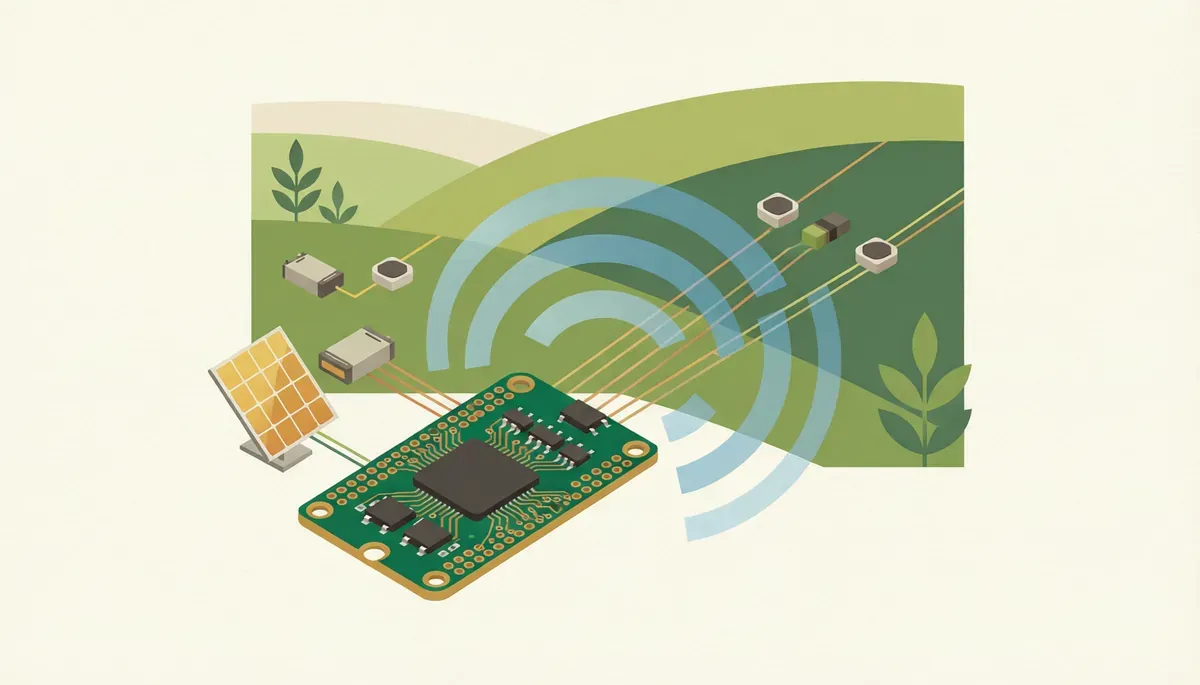
Responde a:¿Cuánto tiempo puede operar realmente un ESP32 en deep sleep con baterías 18650 en condiciones de campo del corredor Ambalá-Calambeo, comparado con las proyecciones teóricas de laboratorio?Media
Hipótesis:Las proyecciones de laboratorio para ESP32 en deep sleep (meses de autonomía con baterías 18650) son alcanzables en condiciones de campo del corredor Ambalá-Calambeo, pero requieren verificación con datos reales de los 18 sensores instalados, ya que factores como la temperatura ambiente, la calidad de la señal WiFi y la frecuencia real de despertar afectan significativamente el consumo.
Evidencia esperada:Arquitectura documentada: ciclo de 5 minutos, 4 segundos activo, deep sleep el resto. Consumo teórico: <10 µA en deep sleep vs. 150-240 mA activo (reducción de 15,000x). El nodo mismo declara que no se ha medido en campo con datos reales del corredor — esta es una pregunta genuinamente abierta que requiere instrumentación.
Última evolución:August 9, 2026
Motivo de evolución:Parte de: Iwagé — Sistema Autosustentable
El Grafo Cognitivo
↑ Deriva de:
📝Sistema autosustentable Iwagé: mapa de un proyecto en construcción
Parte de la serie Iwagé — Sistema Autosustentable; deriva del mapa ancla
📐deep sleep
Concepto definido en este nodo
📐ESP32
Concepto definido en este nodo
📐Edge Gateway
Concepto definido en este nodo
📐WiFi
Concepto definido en este nodo
📐MQTT
Concepto definido en este nodo
📐ULP
Concepto definido en este nodo
📐duty cycling
Concepto definido en este nodo
📐memoria RTC
Concepto definido en este nodo
📐off-grid
Concepto definido en este nodo
📐Redis
Concepto definido en este nodo
📐PostgreSQL
Concepto definido en este nodo
📐Hub Soberano
Concepto definido en este nodo
📐co-procesador ULP
Concepto definido en este nodo
📐reconexión rápida
Concepto definido en este nodo
→ Se aplica en:
📝Granja peri-urbana: modelo financiero de un proyecto real
Aplicación práctica en la granja peri-urbana
❓¿La secuencia de interdependencia identificada (hídrico → riego → energético → automatización → datos) se confirma en la práctica o es un artefacto de modelado?
El nodo mismo declara explícitamente: "no se ha medido en campo con datos reales del corredor Ambalá-Calambeo". Es una pregunta abierta genuina que requiere medición.
↓ Sustenta a:
📄SiliconWit (2026). Power Management and Deep Sleep
Fuente citada que sustenta este nodo
📄Zbotic (2026). ESP32 Deep Sleep Mode: Extend Battery Life in IoT Projects
Fuente citada que sustenta este nodo
📄MyEmbeddedSystems (2025). How to Implement ESP32 Deep Sleep Mode for Battery-Efficient IoT Monitoring
Fuente citada que sustenta este nodo
📄Losant / GitHub (2026). esp32-deep-sleep-mqtt
Fuente citada que sustenta este nodo
Ramificaciones futuras
Preguntas abiertas del catálogo que este nodo toca o ayuda a responder. Click en una para ver todos los nodos del jardín que la exploran:
- ¿La secuencia de interdependencia identificada (hídrico → riego → energético → automatización → datos) se confirma en la práctica o es un artefacto de modelado?La secuencia de interdependencia (hídrico → riego → energético → automatización → datos) refleja el orden real de dependencias técnicas del sistema. Invertir el orden (empezar por automatización antes de tener agua y energía) produciría un sistema que funciona en teoría pero no en campo.
- ¿Cuánto tiempo puede operar realmente un ESP32 en deep sleep con baterías 18650 en condiciones de campo del corredor Ambalá-Calambeo, comparado con las proyecciones teóricas de laboratorio?Las proyecciones de laboratorio para ESP32 en deep sleep (meses de autonomía con baterías 18650) son alcanzables en condiciones de campo del corredor Ambalá-Calambeo, pero requieren verificación con datos reales de los 18 sensores instalados, ya que factores como la temperatura ambiente, la calidad de la señal WiFi y la frecuencia real de despertar afectan significativamente el consumo.