This node defines box: how the deep sleep cycle really works to enable that efficiency, what role the RTC memory plays so that the sensor does not lose track between wake-ups, and how the Edge Gateway with Redis
Defines why the climate of Ibagué requires a calendar different from any generic planting guide, how three seemingly distinct cultivation systems —wicking bed, vertical hydroponics, and permaculture raised beds— complement each other instead of competing, and how this subsystem directly receives the inputs that the hydrological cycle and the bio-refinery already produce.
This node is the bridge — it explains what bioarchitecture is as a discipline, why sloped and flat land do not allow for the same technical solution even though they share the same seven bioclimatic principles.
This node documents why well-designed multifunctional furniture not only solves the physical problem of limited space —already covered in the previous node— but also directly impacts guest ratings, which in turn determines whether your property appears in filtered searches, how much you can charge per night, and how many vacant nights you have per month.
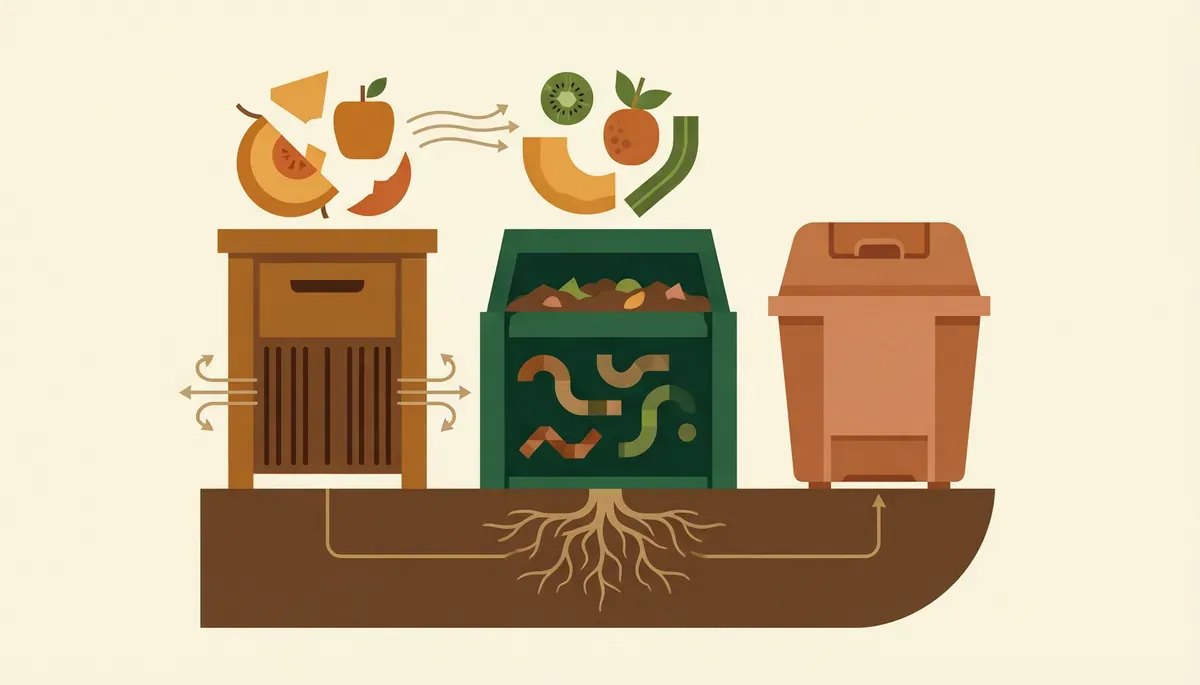
This node explains how each of the three pieces is sized, what connects them into a single bio-refinery instead of three separate projects, and what real barriers —technical and cultural— need to be addressed.
This node develops the three techniques that the Iwagé farm mixes to solve both challenges — the Provençal/Candian well as a passive geothermal exchanger, the airlocks and thermal mass of the Earthship design, and odor control through carbon-nitrogen ratio already applicable to the dry toilet.
This node explains how to properly size an off-grid system for a farm with automation, what Law 1715 says exactly about each of its four benefits, where the real risks of misapplication lie, and what it means.
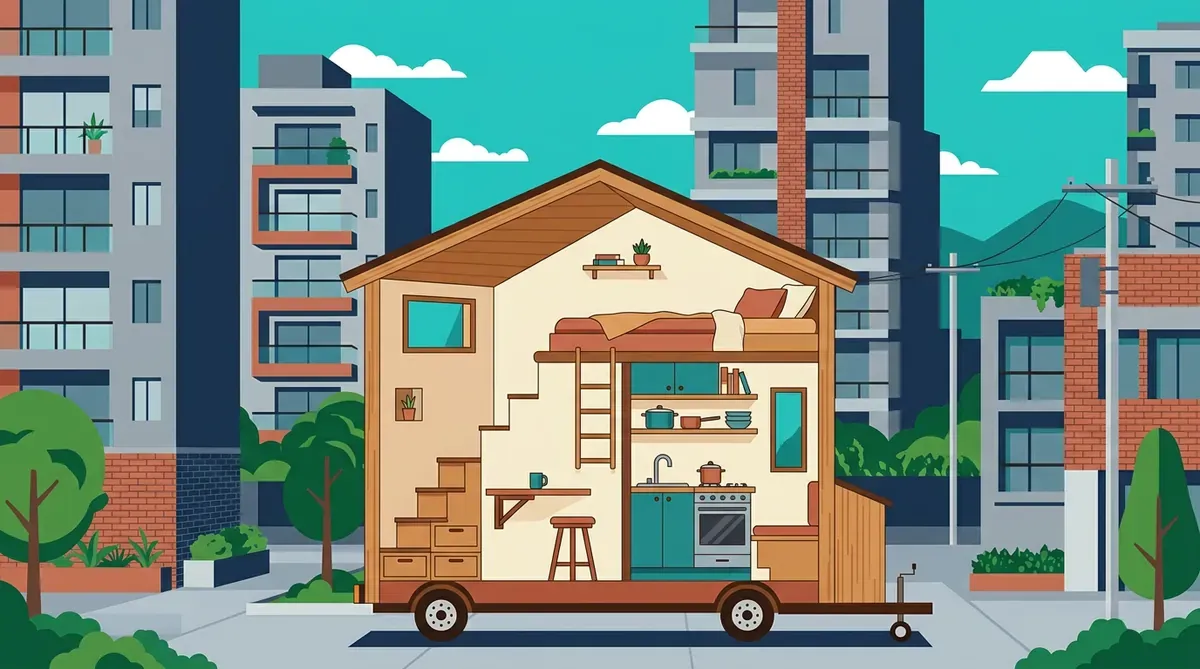
This node documents why the tiny housing movement makes sense specifically in the Colombian context —with its own numbers of housing deficit, its own regulatory and cultural barriers, and its own already built cases.
This is a living document. It is updated as the process advances, when the tiny house has its first walls, when the portal is in production, when the first recurring income arrives from the system. The log continues
Documents how Iwagé sequences access to real Colombian financing instruments — Finagro, Law 1715, Créame, Minciencias — so that none of them becomes the main source of initial capital, but rather a lever that accelerates a phase that has already been self-financed with the previous one.
This presents the field capture system that turned the meliponary into the only subsystem of Iwagé with real evidence, adapted to the three actual stages of a meliponiculture operation: trap capture, daily operation of the meliponary, and product delivery and distribution.
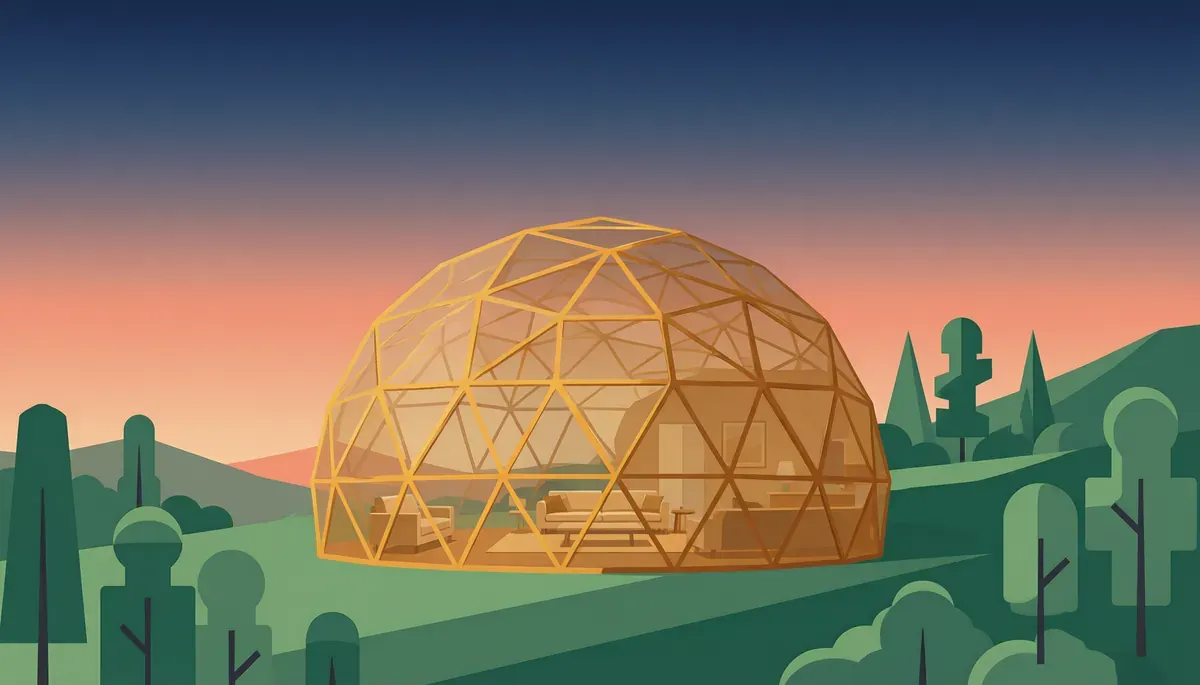
Before being a glamping attraction, the geodesic dome is a complete habitability technology: bioclimatic due to its geometry, self-supporting without interior load-bearing walls, resistant to earthquakes and wind due to how it distributes loads, and radically efficient in the material it uses to enclose habitable space.
Before any financial model of an agroecological project, one question: does the model assume constant yields from month one? If the answer is yes, the Excel is optimistic and the field is going to be brutal. Biological cycles do not negotiate with cash flows — the model has to adapt to them, not the other way around.
This node documents conscious minimalism as a decision protocol: a deliberate system to reduce the number of decisions that a space, a piece of furniture, or a workflow demands from the brain.
If each subsystem of the farm —meliponary, solar, water, agroecosystem— is an instrument of an orchestra, Home Assistant with InfluxDB and Grafana is the score that allows us to see, for the first time, how they all sound together — not just listen to each instrument separately.
This node consolidates the complete regulatory map of the Iwagé self-sustaining system in one place, adds the missing pieces — rural land use for agrotourism, beekeeping registration with the ICA, and the actual sanitary regime of honey — and shows in what order and before which entities each procedure runs.
The Colombian seismic-resistant standard is not an isolated obstacle that a non-conventional project simply 'must overcome' — it is a system with specific doors, some narrower than others, and with real incentives on the other side for those who cross them well.
This node explains what is truly required for an ESG report that withstands scrutiny in 2026, why traceability to the original data —not the eloquence of the discourse— is the only thing that distinguishes legitimate sustainability communication from another case of greenwashing
A self-sustaining system is not declared — it is built subsystem by subsystem, with the data that each stage produces. The nodes of this series document that process in real time: what works, what fails, and what is still a hypothesis.
This node closes the complete circle: how real capture is sized, what the Colombian regulation says exactly about reusing water, what domestic habit change—not just plumbing—makes it possible for that cycle to work, how the sun itself enters the system as a heater and disinfectant, and why the legal distinction between "recirculating" and "reusing" determines whether a project needs prior environmental processing or can operate without it.
This node updates the genesis of the Rule of Three Axes revealing its second conceptual root, which operated from the beginning without us naming it: the authentic Japanese ikigai, not the viral four-circle diagram that almost everyone knows.
The source code of your life is not written once. It is built, project by project, hive by hive, stroke by stroke. It doesn't matter if today you only have a notebook and an idea.
This is part 2 of 3 of the Book of Life. Part 1 documented who I am before the projects. This documents the world from where I build them. Part 3 documents what I am building with all of that — the goals, the open fronts, and the system that unites the three parts in one direction.
A website that only responds when someone attends to it is not an asset — it’s a liability. This node documents why I deleted my previous portfolio and the five operational principles of the Sovereign Hub that replaced it.
For months I thought the problem was documentation. Then I discovered that the real problem was understanding. This node tells the intellectual origin of the Cognitive System of the Sovereign Hub: from the day I encountered the GitLab Handbook and felt that something was wrong with how we store knowledge.
Before investing in or partnering with a meliponiculture project, a direct question: does the financial model being presented to you include real ranges of biological uncertainty, or single figures that assume the colony behaves like a factory? The answer to that distinguishes an honest model from one that has yet to encounter the field.
*For a recruiter evaluating someone who crosses data, field, and trade, the question should not be "how many years of experience do you have in each?" but rather "what rules connect what you do in all three?" The answer to that second question is the only signal that distinguishes real versatility from mere accumulation.
Before any financial model of a project that integrates biology, construction, and technology: does each subsystem have its own cycles and restrictions documented independently before modeling the complete system? If the answer is no, the model will be as optimistic as the first one that is abandoned after a week.
This node is part 1 of 3 of the Book of Life. The most important plan is not what you are going to build. It is who you are when you are not building anything.
Antifragility is not a state that is achieved — it is a practice that is sustained. The most honest question is not 'Am I resilient?' but 'What part of who I am today survives if the part that matters most to me stops functioning tomorrow?' The answer to that is the map of what still needs to be built.