Abstract
The meliponary node mentioned that "the flow of raw data exists — the systematic recording of behavior and production of the thirty hives". This node opens that box: the field capture system that turned the meliponary into the only subsystem of Iwagé with real evidence, adapted to the three actual stages of a meliponiculture operation: trap capture, daily operation of the meliponary, and product delivery and distribution.
The analogy that explains why a single form does not work for all three stages
Analogy: asking the same form to serve to record an attempt to capture in the wild, the routine check of an already established hive, and the delivery of a honey order to a customer is like asking a single application to work equally well for trekking without signal, managing a store's accounting, and dispatching an e-commerce order. Technically, all three are "recording tasks" — but they occur in such different contexts that forcing them into the same format produces a mediocre system for all three, instead of a good one for each.
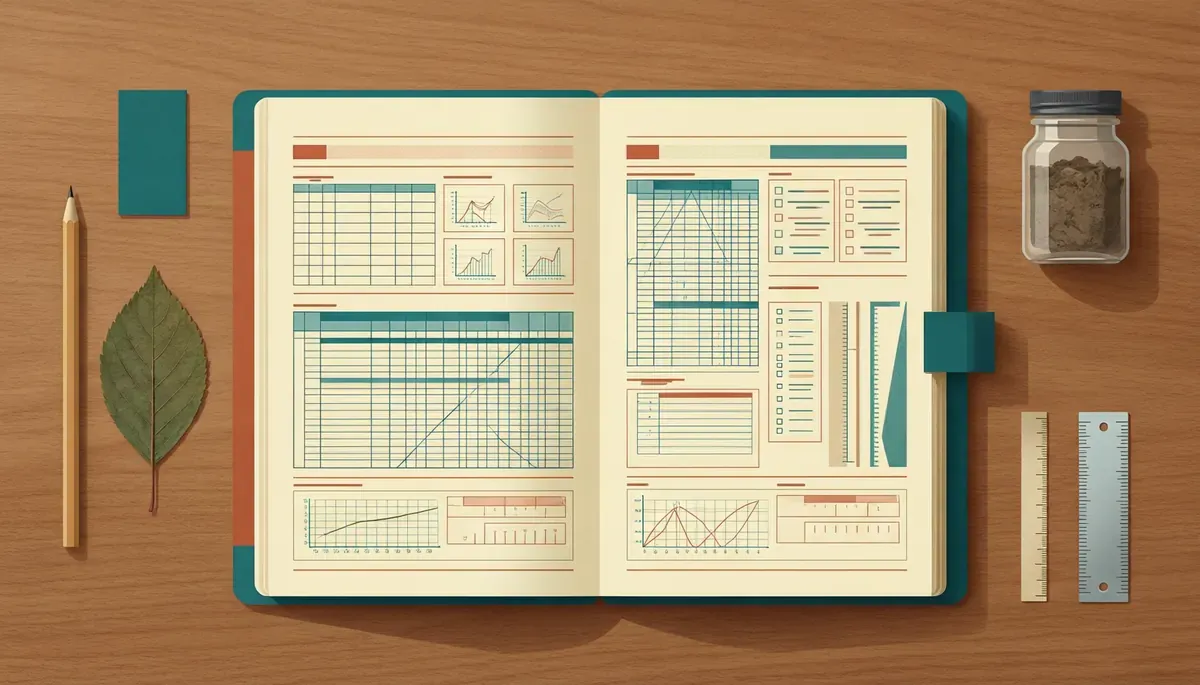
The Iwagé meliponary does not have a field notebook — it has three, each designed from the physical and cognitive reality of its own stage.
Stage 1 — The capture: where the most important data is rarely recorded
The most common way to start or expand a meliponary in Colombia is not by buying colonies — it is trapping: installing baits in temporary nests to take advantage of the natural swarming process of wild colonies, along with the occasional rescue of nests in imminent danger and the division of already established hives. Trapping is the method that requires the most patience and the most disciplined recording, because its success rate is low: a study by CEAD Acacías in Meta measured only 8.33% effectiveness of capture specifically for Tetragonisca angustula, with traps placed at different heights (1, 1.5, and 2 meters) and checked every 30 days.
That 8.33% is the data that most meliponiculturists never record, because instinctively one notes what was found, not what was not found. A well-designed form for this stage records every trap check — whether something was captured or not — because without the complete denominator, the numerator means nothing. It is the same principle of statistical honesty that we already apply in the Iwagé PRO financial model: a range with its complete denominator is worth more than an isolated success figure.
The trap sheet, designed to be completed in the field with minimal effort, records: trap identifier, installation height, type of bait used, date of review, and a single multiple-choice field — empty / with exploratory activity / established colony. No free text at this point: whoever checks a trap mid-morning, possibly after walking a stretch of the Ambalá-Calambeo corridor, does not have the disposition to write a paragraph about an empty trap.
Stage 2 — The operation: where recording competes with observation itself
Once a colony is established in its final box — AF or INPA, depending on the rational type used in the meliponary — the recording changes in nature. It is no longer about looking for something that may not be there, but about carefully observing something that is there, without disturbing it more than necessary. The meliponas, being stingless bees, allow for much less invasive handling than conventional beekeeping with Apis mellifera — no smoker or heavy protective equipment is required, which in terms of recording design means more room to observe calmly, although the same tension between looking and noting persists as in any fieldwork.
The operation sheet — the one that directly feeds the Iwagé PRO simulator — records by hive: identification code, general status (active / defensive / showing signs of swarming / showing signs of stress), activity level at the entrance, and a short field of up to three words for observations that do not fit into the previous categories. The predefined categories are not a limitation — they are, as we have already documented in the conscious minimalism node, the way to reduce the visible choice set without reducing the actual information captured: each category was defined based on the patterns that do matter for the financial model, not from what would sound exhaustive from a desk.
Stage 3 — Delivery and distribution: where recording becomes transactional
The third stage is the only one that involves a third party — the customer receiving the honey, or the company contracting the assisted pollination service already documented in the meliponary node — and for that reason, its recording logic is different: here the data not only feeds the internal model of Iwagé, but also supports a commercial relationship that may need verifiable traceability in front of a customer or auditor.
The delivery sheet records: hive or batch of origin, volume delivered, date, destination (direct sale / pollination service / sample), and the relevant conditions for the pollination case — the biological stress rate due to transport and the quarantine status, already documented with their specific ranges in the meliponary node. Unlike the previous two stages, here a more extensive text field is valid, because the context of a delivery is information that, if lost, cannot be reconstructed with the same reliability as a field note about a hive that is still there to be observed again.
Why this is not "taking nice notes" — it is the difference between an honest financial model and an invented one
The peri-urban farm node documented that the biological delay of 6 to 10 months and the retention rate of 25% to 40% are the variables that most change a financial model of meliponiculture compared to a generic optimistic Excel. Those figures came from stages 2 and 3 of this recording system, sustained over enough cycles to stop being isolated observation and become a reliable range. And the 8.33% capture effectiveness of Stage 1, if Iwagé decides to expand to a second corridor, will be the data that determines how many traps to install and how much time to budget — not an intuition, a number with a denominator.
Commercial analogy: an investor evaluating an agroecological project is not buying the promise of an entrepreneur — they are buying the quality of the measurement system that supports that promise. A financial model with data from a system that also includes failed attempts, not just successes, is a verifiable audit. Without that system, it is at best an educated guess.
What is still unresolved
The three sheets are still on physical paper, not digital — a deliberate decision given that the connectivity of the Ambalá-Calambeo corridor is intermittent, as we have already documented in the n8n production node. Relying on an app that needs signal in the middle of the trapping zone would have repeated the same design error that this node criticizes. Digitalization occurs later, with connection — but that leaves a window where the data only exists on paper.
There is also not yet a version of this system adapted to other subsystems of the farm — the agroecosystem, the biodigester — with its own logic of what to record at each moment of its cycle.
Cited sources
- Bio Report / Humboldt Institute (2020). Stingless bees in Colombia — the three methods of obtaining colonies in Colombia.
- CEAD Acacías, UNAD (2021). Capture of swarms of native stingless bees with trap devices — 8.33% capture effectiveness of Tetragonisca angustula.
- Martínez, D. E. C. & Blandón, O. J. O. (2019). SIPASS Meliponary: an experience with the angel bee Tetragonisca angustula. ECAPMA.
- Nielsen Norman Group (2025). Few Guesses, More Success: 4 Principles to Reduce Cognitive Load in Forms.
- Direct field evidence — Iwagé meliponary, Ambalá-Calambeo corridor, 2023-2026.
Preguntas abiertas del catálogo que este nodo toca o ayuda a responder. Click en una para ver todos los nodos del jardín que la exploran:
- ¿Cuándo exactamente los subsistemas diseñados (energético, hídrico y ciclo de nutrientes) alcanzarán el punto de operación simultánea?Los tres subsistemas (energético, hídrico y ciclo de nutrientes) no alcanzarán operación simultánea hasta que el más lento —probablemente el ciclo de nutrientes, que depende de biología— complete su primer ciclo completo de maduración, estimado en 18-24 meses desde la instalación.
- ¿El ROI del 22% documentado en el modelo financiero se mantiene cuando el sistema opera con todos los subsistemas en simultáneo?El ROI del 22% proyectado en el modelo financiero inicial es un escenario optimista que asume operación simultánea de todos los subsistemas. En operación parcial (solo hídrico + energético), el ROI real estará más cerca del 8-12% durante los primeros 24 meses.