Responde a:Are cross-domain learning transfers a scientifically documented phenomenon or an anecdotal observation from personal experience?Media
Hipótesis:There is scientific evidence supporting the transfer of learning between different domains.
Evidencia esperada:Revisión sistemática de literatura y comparación con el caso documentado.
Responde a:What is the most honest way to measure whether the personal source code (filters) is producing better decisions over time, without self-justification bias?Media
Hipótesis:Personal filters can be evaluated using objective indicators related to projects, clients, and collaborators.
Evidencia esperada:Métricas históricas, resultados de proyectos y análisis longitudinal.
Planted:June 9, 2026
Last evolution:July 21, 2026

Abstract

The leap from loose notes to a cognitive system is not solved with a better tool — it is solved with an architecture that distinguishes types of entities and defines how they relate. This node documents the design of the Cognitive System of the Sovereign Hub: why each entity exists, what references influenced each architectural decision, and what principle — connections are more important than classification — ended up governing all levels of the system. It is not a finished product: it is the record of an architectural investigation still in evolution.

The Problem

Every project generates knowledge. That knowledge ends up distributed among documents, spreadsheets, conversations, code repositories, emails, and personal memory. At first, it seems sufficient.

Then cracks appear: the same idea ends up written five times with different names, decisions lose their original context, there is no evidence of why something was done one way and not another, changing a definition forces modifications to dozens of documents, artificial intelligence produces inconsistent answers because each conversation starts from a different context. Knowledge stops behaving like a system and begins to behave like a dead file.

My goal was never to build a "second brain." My goal was to build a system that could continue to think consistently even when the volume of knowledge grew by several orders of magnitude.

The References Studied

Before designing my own architecture, I studied various established approaches. Each one solved a specific problem very well. None solved all simultaneously.

Andy Matuschak demonstrated that true value appears in the connections between ideas and not in classification through labels. The idea of notes as living entities completely changed my way of thinking about documentation. However, his system is oriented towards individual human thought: it does not address architectural governance or operational implementation.

Maggie Appleton provided a more honest way to publish knowledge: she does not publish closed conclusions, she publishes evolving thought. That approach eliminates the pressure to write only "finished" documents. But it is a content-centered system: it does not define how that knowledge becomes reusable components.

Obsidian probably materializes the idea of connected knowledge better than anyone — backlinks, graphs, and bidirectional links represent a huge leap from folder organization. But Obsidian is a platform, not a knowledge architecture. Each user ends up inventing their own.

Ward Cunningham introduced a revolutionary idea with the wiki: knowledge improves when it can evolve continuously. That philosophy remains valid. However, a traditional wiki does not distinguish between an observation, a definition, an architectural decision, or experimental evidence. Everything ends up being just a page.

Gwern Branwen raised the standard of evidence-based documentation: each important claim is backed by sources, experiments, or original analysis. His work demonstrates that authority comes from the quality of evidence, not from the author's prestige. That principle became one of the pillars of the system.

Open Graph, although it belongs to the web world, introduces a very powerful idea for cognitive architecture: each resource must be described using standardized metadata that allows other systems to understand it automatically. That principle directly influenced the documentary structure of the Cognitive System.

What None Fully Resolved

After reviewing these references, the pattern became clear: all solve one dimension of knowledge very well, but no architecture simultaneously integrates knowledge, evidence, decisions, implementation, evolution, artificial intelligence, traceability, and operational capabilities. There appeared the need to design something different.

The Emerged Architecture

Instead of starting with tools, the architecture began by defining responsibilities. Each type of document had to answer only one question, and no document could replace another.

The Architecture Charter defines the purpose. The Cognitive Model explains how the system thinks. The Architecture Manual describes how it is organized. The Operational Framework establishes how it works. The Protocols define operational rules. The Component Catalog identifies reusable pieces. The Dictionary maintains a consistent language. The Architecture Decisions record the reasoning behind each change. The Evidence Policy establishes what can be considered reliable knowledge. The Cognitive Units organize the development of capabilities. The Implementation Specifications translate architecture into technical design. The Capabilities and Implementations turn knowledge into functioning systems.

Each document exists because it answers a different question. They all complement each other.

The Principle That Governed Everything

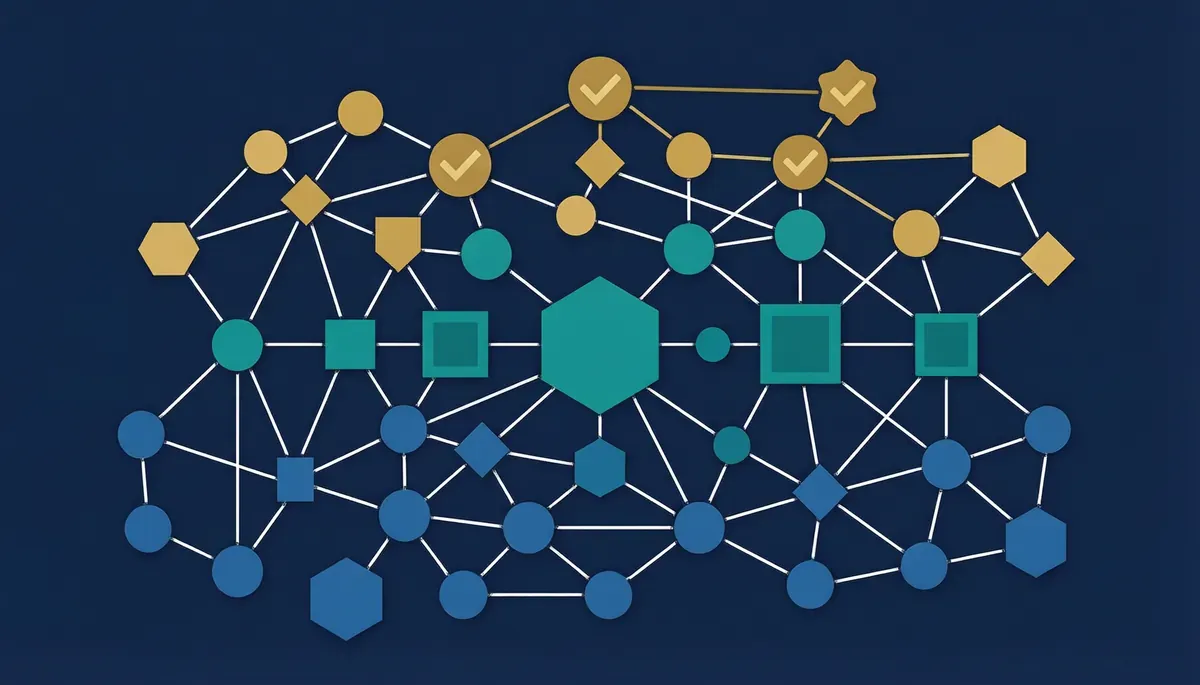
Over time, an idea began to repeat itself at all levels: connections are more important than classification. It does not only matter what a document contains. It matters where it comes from, what evidence supports it, what decision originated it, what components it uses, what capabilities it implements, what other documents depend on it. Knowledge stops being organized by folders and begins to be organized by explicit and typed relationships.

The Incremental Change

During the design, a significant shift occurred. Initially, I tried to document all possible components — which led back to analysis paralysis. The architecture then shifted towards an incremental approach: first, a Cognitive Unit is defined, then only the necessary components for that unit are identified, and then the associated decisions, protocols, specifications, and implementations are developed. The architecture stops growing horizontally: it begins to grow by complete capabilities.

What Is Still Not Resolved

This system still has questions that I cannot answer without more evidence of real use:

  • How will it evolve when there are hundreds of components instead of dozens? The architecture is designed to scale, but no architecture survives intact when faced with real scale.
  • How to maintain simplicity without losing expressiveness? Each new entity solves a problem but also increases the maintenance surface.
  • How to allow multiple artificial intelligences to operate simultaneously on the same architecture without producing inconsistencies?
  • How to objectively measure the quality of the knowledge that the system produces? Without a metric, improvement is intuition, not engineering.
  • Which components can be fully executed by AI agents without human supervision, and which will require permanent human validation?

These questions define the next stage of this research.

Cited Sources

  • Matuschak, A. Evergreen Notes. andymatuschak.org
  • Appleton, M. A Brief History & Ethos of the Digital Garden. maggieappleton.com
  • Cunningham, W. WikiWikiWeb. c2.com
  • Branwen, G. About the Site. gwern.net
  • Open Graph Protocol. The Open Graph Protocol. ogp.me
  • Taleb, N. N. Antifragile: Things That Gain from Disorder. Random House, 2012.
  • Direct field evidence — Sovereign Hub, design of the Cognitive System, 2026.
The Cognitive Graph
Ramificaciones futuras

Preguntas abiertas del catálogo que este nodo toca o ayuda a responder. Click en una para ver todos los nodos del jardín que la exploran:

Urgent For a limited time

A "half-broken" piece of furniture or structure in your Airbnb costs 4× more in negative reviews than fixing it on time.

Design my structure →
Data Verified data

Projects with prior 3D modeling reduce manufacturing errors by 80% and material waste by 30%.

View technical cases →