Planted:July 8, 2026
Last evolution:July 21, 2026

Abstract

In the practical viability node, it has already been noted as pending: "the phase financing strategy... is mapped but not documented as a replicable guide. There is a node dedicated to that in the series." This is that node. It documents how [[Iwagé|Iwagé]] sequences access to real Colombian financing instruments — [[Finagro|Finagro]], [[Law 1715|Law 1715]], [[Créame|Créame]], [[Minciencias|Minciencias]] — so that none of them becomes the main source of initial capital, but rather a lever that accelerates a phase that has already been self-financed with the previous one.

The Problem This Sequence Solves

The first time a commercial partner asked about the budget for the geodesic dome, the real question was not the number. It was another: Why should I trust capital in a rural tourism project that has not sold a single night yet? It is the right question, and it is the one that most nature tourism projects in Colombia do not answer well — they ask for capital to build the promise, not to scale something that already works.

The phase financing strategy in [[Iwagé|Iwagé]] inverts that order: each phase is financed with the cash generated by the previous phase, and external credit or incentive instruments — when they come in — accelerate a specific phase, not finance the startup of the entire project.

The Analogy That Explains Why Order Matters More Than Amount

Analogy: this is how a colony of Tetragonisca angustula, the angelita we work with in the meliponary, builds its hive. The colony does not first raise the entire structure of empty cells in the hope of filling them later — it extends one cell, fills it with brood or reserve, and only then builds the next one. There is never an empty structure waiting for resources: there are already validated resources that become the next structure. If a colony tried to build the entire hive before having the nectar flow to sustain it, it would end up with an empty hive and no reserves for the first cloudy day.

A company that asks for a complete investment round before selling the first night of glamping is doing exactly what no healthy colony does: building the cell before knowing if there is a flow to fill it. The phase financing strategy is not slower due to decorative prudence — it is the same biological logic that we have already validated in 30 hives, applied to capital instead of wax.

Why This Cannot Be Solved Just with Will — The Real Instruments and Their Limits

Idealizing self-financing is as risky as idealizing external debt. In the [[Iwagé|Iwagé]] ecosystem, we have identified three real Colombian instruments — and their limits:

1. [[Finagro|Finagro]] (Special Credit Line — Rural LEC)

  • Real limit: $150 million COP per project.
  • Rate: DTF + 2-4% (effective ~12-14% annual), depending on the type of producer.
  • What it finances: Inputs, small machinery, adaptation of productive infrastructure, limited working capital.
  • What it does not finance: Land, sophisticated market studies, unregistered imported technology, brand components or digital marketing.
  • Required guarantee: FNG (National Guarantee Fund) covers up to 80% for small producers — the remaining 20% is usually a real counter-guarantee (mortgage on the property or joint guarantor).

2. [[Law 1715|Law 1715]] of 2014 (Incentive for Clean Energy Generation)

  • Benefit: 50% deduction of the investment in FNCE (Non-Conventional Energy Sources) on net income, for 5 years.
  • What it covers: Solar panels, biomass systems, small hydroelectric plants, energy efficiency equipment.
  • Frequent trap: The benefit is on income — if the project does not have accounting profits in the first 3 years (like any early-stage rural venture), the incentive is zero in practice. It is not a direct subsidy. It is a tax discount that only works when you are already paying taxes.

3. [[Créame|Créame]] — Entrepreneur Fund (seed capital line)

  • Real limit: $80 million COP per business plan (in public call).
  • What it finances: Market studies, plant adaptation, working capital, technical assistance, prototyping.
  • What it does not finance: Purchase of land, vehicles, construction of heavy civil works.
  • Counterpart: The entrepreneur must contribute at least 25% in kind or cash — a real barrier when the venture is rural-based without prior savings.

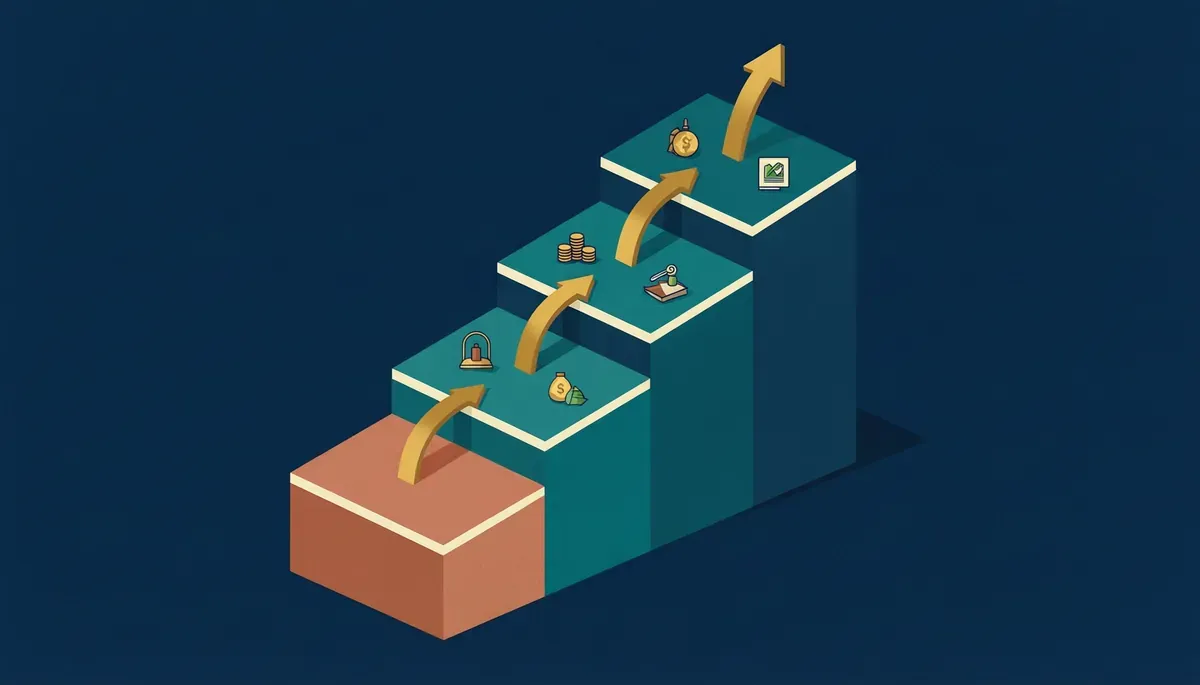
The Sequence We Propose — Phase 0 to Phase 3

Each phase defines:

  • What it finances: what part of the project is activated with that capital.
  • Minimum evidence: what must be proven before requesting the next instrument.
  • Recommended instrument: which of the three (or combination) corresponds.

Phase 0 — Characterization and Prototype ($5-15M of own investment)

  • What it finances: Validation of suppliers, processing tests, first purchases from allied producers, artisanal packaging.
  • Minimum evidence: 3 batches of coffee processed and sold to real customers (not friends), manual traceability, cup profile registration.
  • Instrument: Own resources or informal loan from a family member (not [[Finagro|Finagro]] yet, the amount is too low and the structuring cost eats it up).
  • Exit indicator: Positive gross margin sustained for 3 consecutive months.

Phase 1 — Working Capital for Purchasing Pergamino Coffee ($30-50M)

  • What it finances: Purchase of the complete harvest from 5-10 allied producers in the Ambalá-Calambeo corridor; payment of 30% on FNC price.
  • Minimum evidence: Supplier registration with georeferencing, signed purchase contracts, coffee samples from each batch with technical sheet.
  • Recommended instrument: [[Finagro|Finagro]] — Rural LEC for working capital. The farm or lease contract serves as a guarantee for the 20% counter-guarantee FNG.
  • Exit indicator: Inventory turnover ratio < 45 days for purchased pergamino coffee.

Phase 2 — Equipment for Processing Hub ($60-120M)

  • What it finances: 5 kg/batch roaster (or two 2 kg ones if space is limited), vacuum packing equipment, hermetic storage silos, pergamino coffee sorting table, moisture control equipment.
  • Minimum evidence: At least two harvests purchased and processed in Phase 1; demonstrated capacity to sell 80% of processed coffee within 60 days of roasting; active commercial relationship with at least 2 marketing channels (specialty coffee shops in Bogotá/Medellín + online store).
  • Recommended instrument: [[Finagro|Finagro]] (fixed investment) + [[Law 1715|Law 1715]] applied to solar panels for the hub (if built with energy efficiency from the design).
  • Exit indicator: Installed capacity of 500 kg/month of roasted coffee; gross margin > 40% consistent for 6 months.

Phase 3 — Traceability and Certification of Origin ($80-200M)

  • What it finances: Blockchain traceability platform (or similar immutable), certification of origin (Denomination of Origin Tolima or Rainforest Alliance/UTZ seal), international tasting round contracted by a certified Q-Grader, setup of in-person tasting experience at the hub (for visits from international buyers).
  • Minimum evidence: Hub from Phase 2 operating at 70% capacity; at least one international buyer expressing firm interest or a pre-purchase agreement; functional manual traceability that can migrate to digital traceability.
  • Recommended instrument: [[Créame|Créame]] — Entrepreneur Fund (because it covers market studies, technical assistance, and adaptation, which is exactly what this phase needs). The 25% counterpart can come from the cash flow generated in Phase 2.
  • Exit indicator: Premium price > 30% over specialty coffee price without traceability; at least 2 recurring international clients.

What We Learned About the Toughest Constraint (Which Is Not Money)

The real bottleneck is not the amount of any of these three instruments. It is the management capacity of the rural entrepreneur to: (a) structure the request ([[Finagro|Finagro]] forms are a pain that they shouldn't be — but no one is going to fill out the form for you), (b) have accounting documentation in order (the first 6 months of [[Iwagé|Iwagé]], operational expenses were kept in a notebook; that does not work for any formal instrument), (c) coordinate the timing between credit approval and the harvest purchase window (coffee is purchased in October-November; if the [[Finagro|Finagro]] disbursement arrives in January, you missed the harvest).

The operational recommendation: hire an administrative manager by the hour from Phase 0, even if it seems like an unnecessary expense. The accounting structure is not optional — it is the enabler that allows access to all the instruments from Phase 1 onwards.

Phases

Phase Investment Instrument Exit Evidence
Phase 0 $5-15M Own Positive gross margin for 3 months
Phase 1 $30-50M [[Finagro Finagro]] Rural LEC
Phase 2 $60-120M [[Finagro Finagro]] + [[Law 1715
Phase 3 $80-200M [[Créame Créame]] Entrepreneur Fund

What I Still Don't Know

  • What real rate did the first rural entrepreneur who applied to [[Finagro|Finagro]] in 2025-2026 with the new government end up paying? Reference rates changed twice during the writing of this node.
  • Is [[Law 1715|Law 1715]] still active or was it modified by the energy transition of the National Development Plan 2026-2030? Tax incentives for clean energy are usually the first to be restructured.
  • How long does it really take to approve a Rural LEC from [[Finagro|Finagro]] when the applicant does not have a formal credit history as a company? The "official" timelines (30-45 days) contrast with the accounts of 4-6 months circulating in coffee guilds.
  • Does the Entrepreneur Fund still provide up to $80M per business plan or were there adjustments to the SGR 2026 limit? The publicly available information at the time of writing this is not updated.

Editorial Notes

This node is technical-economic and belongs to the practical viability series of the [[Iwagé|Iwagé]] ecosystem. It does not include figures from the specific project (real income, margins, etc.) because those are project data, not strategy data. The amounts per phase are estimated ranges based on real quotes from the [[Iwagé|Iwagé]] team for 2025-2026, but each venture must adjust them to its own cost structure.

The analogy of the angelita (Tetragonisca angustula) is not decorative — it is the same principle of organic growth that we validated in the field with the meliponary and that we transfer to the capital strategy.

Urgent For a limited time

A "half-broken" piece of furniture or structure in your Airbnb costs 4× more in negative reviews than fixing it on time.

Design my structure →
Data Verified data

Projects with prior 3D modeling reduce manufacturing errors by 80% and material waste by 30%.

View technical cases →